

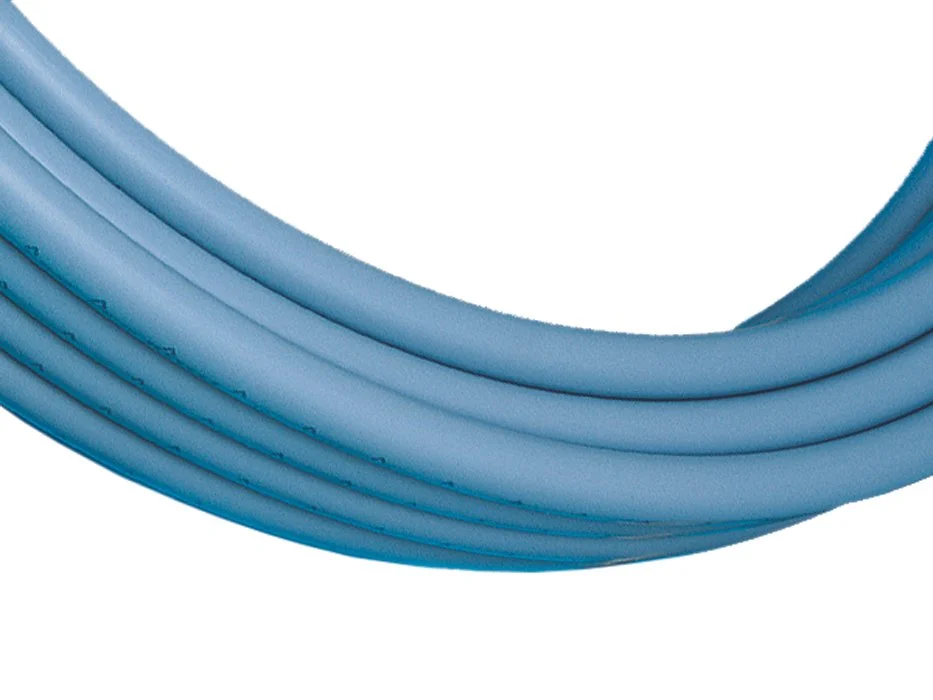
POLYBUTENE PB-1 PIPES
Lighter, flexible, stronger, durable and recylable.
Delivered proven performance in Australia since the early nineties
Polybutene (PB-1) Piping Systems
Polybutene-1 (PB-1) piping systems have demonstrated their exceptional long-life performance in demanding industrial, large-scale and domestic applications. Piping systems made from PB-1 are engineered to offer efficient and reliable assembly, superior pipe flexibility and strength, easier on-site handling and best in class energy efficiency.
Basell PB-1 is not the same as Typlex 1050 PB
In Western Australia, particularly in Perth, there have been numerous reports of water leaks in homes due to failures in Pro-fit polybutylene pipes manufactured by Iplex Australia. These issues primarily affect pipes installed between mid-2017 and mid-2022.
The failures were linked to the Pro-fit polybutylene pipes, specifically those made from Typlex 1050 resin.
Pipes manufactured using Basell PB-1 have been installed in Australia for over 25 years. These pipes continue to be supplied by Leap in Australasia as well as manufactured and sold in Europe and Asia.
PB-1 Characteristics.
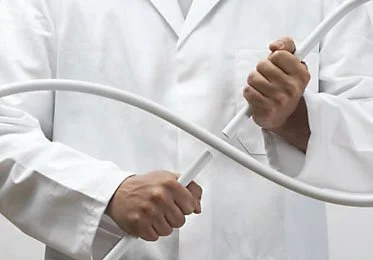
PB-1 is lighter, flexible, strong and recyclable. PB-1 Pipes are highly resistant to solvents and chemicals. It has excellent creep resistance combined with low stiffness making PB-1 the technically preferred material for hot and cold-water pipes.
PB-1 pipes also offer superior thermal and mechanical properties for end-use applications requiring high strength and flexibility over a broad temperature range.
It is odourless and tasteless and meets ‘contact with food’ approvals making it ideal for use in drinking water applications.
It has excellent acoustic qualities allow for sound dampening with high absorption of “water hammer” and other noises.
The benefits of Polybutene-1 (PB-1)
Polybutene-1 has an operational record in Europe, Asia and Australasia of over 50 years continuous service in pressurised hot and cold-water installations and is widely recognised as the technology standard for these systems.
Since the first successful installations, advances in material technology and production processes, combined with the introduction of standards protocols, has advanced the performance of PB-1 piping systems even further.
-
Polybutene-1 offers improved handling due to its flexibility, reduced pipe wall thickness and low memory effect. In addition to the potential cost savings of faster installation, polybutene-1 pipes provide opportunities for installation in tight, cramped spaces
-
Performance benefits include lower thermal diffusivity than copper pipes which means water takes longer to freeze in them during cold weather.
PB-1 piping systems will not scale-up in hard water areas or corrode in soft water areas. They absorb and suppress sound, rather than transmitting it and they are not subject to 'water hammer' particularly in areas noted for high water delivery pressures.
-
Long-term ISO 9080 tests performed on Polybutene-1 pipes project service lifetimes of 50 years or more for PB-1 hot water pipes operating with water at 70°C, at 10 bar pressure. ISO 9080 tests are carried out according to international protocols by independent and accredited test agencies such as EXOVA.
-
Piping systems' environmental impact in areas including landscape scarring, emissions into the atmosphere, soil and water – and recycling potential are assessed in ‘cradle to grave’ studies. Such a study was conducted by the Technical University of Berlin on various drinking water pipe systems, including galvanised steel, copper, and plastics: cross-linked Polyethylene (PE-X), Polypropylene (PP-R), Chlorinated Polyvinylchloride (PVC-C) and Polybutene-1 (PB-1).
-
PB-1 pipes are expected to have service lifetimes of 50 years when exposed to water containing 4 ppm chlorine at 60°C. Moreover PB-1 pipe has been shown to perform for >1,000 hours in chlorine content of 30 ppm at 30°C/6 bar (Test Report-No. PB 1087C, Infraserv Höchst Technik, 2004).
Independent test results – Long-term reliability and chlorine resistance
ASTM F2023 test report obtained for LyondellBasell's Akoalit PB 4267 confirming more than 50 years extrapolated lifetime at continuous use at 60°C and a chlorine concentration of 4 ppm.
-
PB-1 pipe applications installed in Europe for underfloor heating (since the early 1960s) and district energy (since the mid 1960s) are still operating successfully.
PB-1 pipes were installed in the Vienna Geothermal Project in 1974, replacing metal pipes which proved unsuitable due to rapid corrosion and operated until 2010 when an updated system was installed. The Vienna Geothermal project utilises very aggressive geothermal water as the heating medium. The PB-1 piping system ran continuously for 36 years at a constant temperature of 54°C and a pressure of 10 bar until replacement due to system reconfiguration.
PB-1 piping systems are specified increasingly in well-known major products and locations as: Royal Albert Hall, Canary Wharf, Imperial War Museum North, Säntis 2000
Independent test results – Assessment of Polybutylene Plumbing Installation after 18 Years of Service
Presented at Antec 2013 – independent study (onsite evaluation and lab testing) of the condition of a polybutene (PB) plumbing system in a multi-unit apartment complex.
Why Choose PB-1 over PEX?
Polybutene-1 offers real benefits for piping systems compared to PEX and PE-RT.
For pressure piping projects, the true cost variation of piping systems across competing materials is more than a per length cost comparison for the same outside pipe diameter. Specifiers’ main criteria are Standard Dimension Ratio (SDR) comparing pipe materials for durability against pressure, but they also look at ease of installation impacting onsite costs; jointing options, long-term system performance and the projected life span.